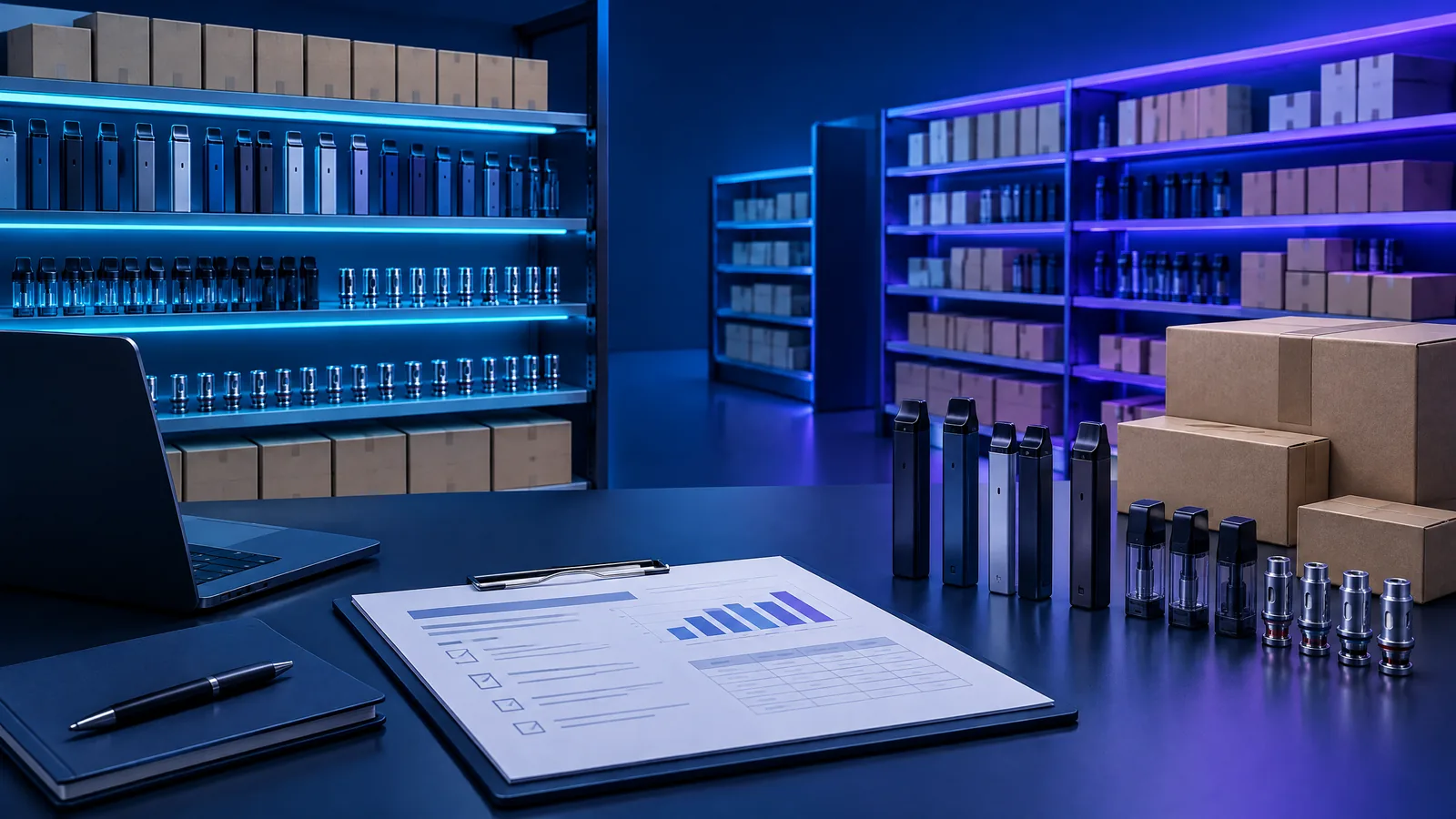
A retail chain gets a better response from a vape wholesale supplier when its inquiry defines the buyer, hardware scope, review process, documentation needs, and decision gates before discussion begins. Use a structured, verified-buyer brief to align technical, quality, logistics, and product-specific U.S. regulatory questions without treating the supplier’s response as legal advice.
This guidance is for U.S. licensed business buyers aged 21+ discussing B2B manufacturing, wholesale, OEM/ODM, or private-label vapor hardware. It is not consumer shopping guidance.
Start with a retail-chain buying brief
A useful wholesale inquiry lets the chain compare responses on a consistent basis. Name the legal buying entity, authorized contact, business channel, and review stage. State whether the request concerns an existing specification, a controlled adaptation, or an early OEM/ODM discussion.
Keep the first submission verifiable. A non-binding planning range can frame the opportunity, but it is not a purchase commitment. Distinguish a documentation or evaluation request from authorization to produce, ship, or use artwork.
Use this concise intake checklist before approaching a vape wholesale supplier:
- Buyer and decision team: Legal entity, verified contact, procurement, quality, and final approver.
- Program objective: Channel, territory, retail format, review path, and wholesale, OEM/ODM, or private-label scope.
- Hardware scope: Product family, configuration ID, interfaces, power or charging parameters, materials, and compatibility constraints.
- Evaluation standard: Required documents, functional checks, packaging review, and acceptance record.
- Document request: Configuration-specific index, specification version, change history, traceability approach, and review materials.
- Commercial framework: Planning range, replenishment concept, commercial discussion points, and quotation contact.
- Operations route: Destination, transport mode, importer-of-record plan, broker contact, and entry data needs.
- Governance: Change notification, artwork approval, escalation, and change authority.
A single inquiry owner and versioned attachments help keep the exchange controlled. For a broader starting point, use an internal supplier due-diligence checklist before sharing the brief externally.
Describe the hardware as a controlled configuration
“Vapor hardware” is too broad for a retail-chain inquiry. Describe the requested configuration in language procurement, quality, and engineering can review consistently. Identify the product type, interface, charging approach, core materials, fit requirements, component relationships, and packaging format. Include references only when cleared for external sharing.
Ask the supplier to identify the configuration and document revision to which it is responding. Define the changes needing notice before review, such as a component, interface, material, packaging, or labeled-description change.
For private-label or OEM/ODM discussions, identify what is fixed and what is open, including artwork ownership, packaging workflow, model designation, and approval sequence. Our OEM/ODM and private-label overview can help frame this as a controlled business project.
Quality questions should be configuration-specific. Ask about records for incoming components, assembly checks, final inspection, nonconformance, and configuration release. The vapor-hardware quality inspection checklist can organize the chain’s review.
Build a document and U.S. regulatory review track
Do not treat a general supplier presentation as proof of the status of a particular product. FDA states that tobacco products imported or offered for import into the United States must comply with applicable requirements. Its import guidance says review may verify market authorization, labeling, and user fees, using entry information such as the declared manufacturer, importer or consignee, product description, and relevant affirmations of compliance.
Create a separate, configuration-specific regulatory and document workstream. Request an index identifying the exact configuration, version date, responsible entity, and transaction. Verified buyers should request product-specific U.S. regulatory status and supporting documents for the exact product under review, not rely on broad descriptions or materials for another configuration.
FDA’s official ENDS page states that its listed authorized e-cigarettes are the products that may lawfully be sold in the United States and that authorization is not a general product endorsement. Avoid generic approval claims. Ask for the precise, reviewable basis offered for the proposed configuration and route it to qualified advisers.
For a liquid nicotine container, raise packaging questions early. CPSC guidance explains that qualifying containers must use packaging meeting 16 CFR § 1700.15 and discusses a General Certificate of Compliance for covered consumer products. Applicability depends on the product and transaction.
Set commercial, quality, and logistics decision gates
An effective inquiry tells each function what it must decide before the next stage. It does not promise an order or shipment. Use a short matrix to route and compare supplier responses.
| Decision gate | Chain should define | Supplier response should address |
|---|---|---|
| Configuration control | Required model or revision, approved attachments, and change-notice threshold | The configuration reference, document version, and any open technical questions |
| Quality review | Evaluation criteria, inspection record, disposition authority, and issue escalation | Proposed records, traceability approach, and response path for deviations |
| Commercial review | Planning range, quotation assumptions, responsible contacts, and approval sequence | Clearly stated scope, commercial assumptions, and items needing buyer confirmation |
| Inbound planning | Destination, proposed mode, importer-of-record plan, and information needed by the broker | Accurate product description and manufacturer, origin, composition, intended-use, and value data as applicable |
The import row deserves early attention. CBP says the importer of record remains responsible for correct entry documentation and applicable duties, taxes, and fees, even when using a customs broker. Give the broker and compliance team adequate product detail before goods move.
Close with next actions rather than assumptions: expected response format, document-sharing method, questions needing written resolution, and internal review order. A supplier documentation checklist helps keep the exchange auditable.
FAQs
What should a retail chain disclose in its first inquiry?
Share the verified business identity, authorized contacts, channel, project stage, technical scope, evaluation criteria, and a non-binding planning range. Limit confidential information to what is needed for a relevant response.
Which documents should a chain request first?
Start with a configuration index, controlled specifications, change history, traceability approach, and materials for the exact hardware under review. Verified buyers should separately request the product-specific U.S. regulatory-status documents they need.
Can a chain discuss private-label packaging at the inquiry stage?
Yes. Identify the artwork owner, packaging scope, approval path, and change-control expectations. Keep final artwork release separate from exploratory discussion.
Who owns final import and regulatory decisions?
The chain should designate those owners and consult qualified advisers as needed. A broker can support entry work, but CBP says the importer of record remains responsible for correct entry documentation and applicable charges. Supplier materials do not replace the buyer’s review.
Sources and further reading
- FDA — Importing Tobacco Products
- FDA — E-Cigarettes, Vapes and Other ENDS Authorized by the FDA
- U.S. Customs and Border Protection — Tips for New Importers and Exporters
- U.S. Consumer Product Safety Commission — Liquid Nicotine Packaging Business Guidance
Ready to organize a configuration-specific B2B inquiry? Verified business buyers can request a quote from Autosweave Labs with their buying brief, hardware scope, and documentation questions.