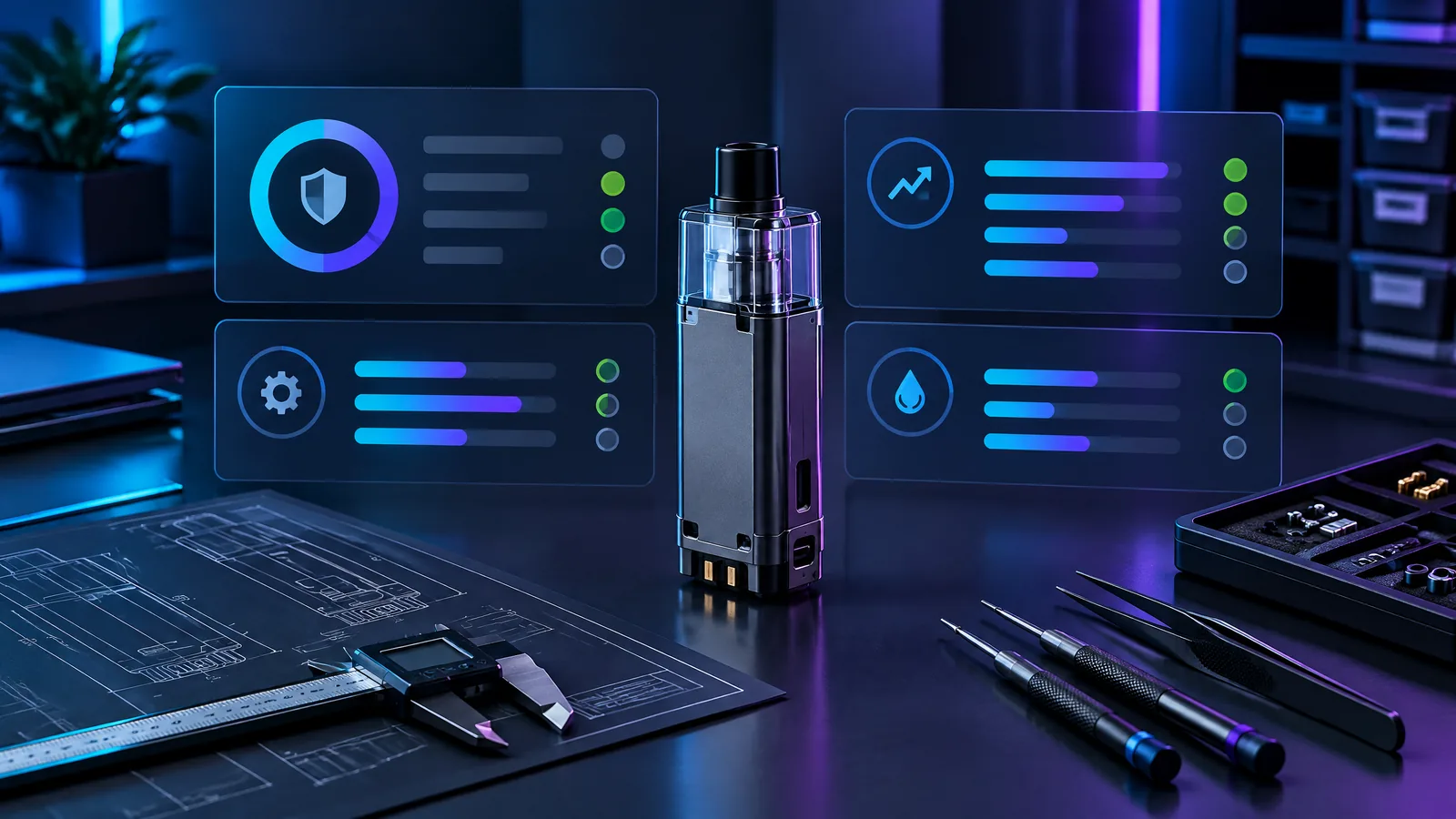
A vapor hardware supplier evaluation scorecard turns a supplier conversation into a documented B2B decision. It should assess regulatory documentation, product definition, quality evidence, change control, and import readiness—not sales language. For U.S. licensed buyers age 21+, it creates a repeatable record of reviewed materials, assigned actions, unresolved gaps, and configuration-specific decisions before a commercial program advances.
Start With a Weighted, Evidence-Based Framework
A useful scorecard is short enough to use consistently and specific enough to reveal gaps. Weight categories for the program, then score only materials actually reviewed. An unverified item should not receive a favorable score because it may be addressed later.
| Scorecard category | What to review | Evidence that supports a score | Decision signal |
|---|---|---|---|
| Product definition | Model, bill of materials, interfaces, labeling artwork, and configuration history | Controlled specification set and revision identifiers | The reviewed item can be identified without ambiguity. |
| Regulatory documentation | Product-specific status records and ownership of supporting files | Dated records tied to the exact configuration | Escalate gaps before advancing the program. |
| Quality system behavior | Incoming controls, in-process checks, final inspection, and issue handling | Inspection plan, sample records, and corrective-action workflow | Evidence shows how nonconforming units are contained and reviewed. |
| Change control | Parts, firmware, tooling, material, packaging, or process changes | Written notice process, approval gates, and revision log | The buyer can assess changes before they affect the agreed configuration. |
| Supply and import readiness | Origin data, packing details, commercial documents, and handoffs | Traceable document set aligned to the item being imported | The buyer can prepare accurate entry information. |
Use a 0–3 scale: 0 = not provided or unexplained; 1 = incomplete; 2 = sufficient for review; 3 = clear, current, and configuration-traceable. Record the document, revision, date, reviewer, and follow-up owner. That trail matters more than a total score.
For brand-owned or specification-controlled projects, align the review with the OEM/ODM and private-label framework.
Make Documentation a Gate, Not a Footnote
Documentation connects the exact hardware configuration to the buyer’s U.S. obligations. FDA states that it regulates ENDS manufacture, import, packaging, labeling, advertising, sale, and distribution, including components and parts while excluding accessories. Examples include cartridges, atomizers, certain batteries, tank systems, mouthpieces, and programmable software (FDA, ENDS overview).
Score whether the supplier organizes product-specific records by configuration, not broad regulatory statements. Ask who maintains the controlled file, how versions are named, and whether supporting materials map to a specific model and revision.
FDA explains that making, modifying, fabricating, assembling, processing, labeling, repacking, relabeling, or importing a tobacco product can make an entity a tobacco product manufacturer. Its guidance lists obligations that can apply, including establishment registration and product listing, ingredient information, and premarket pathways (FDA, Manufacturing). Document each party’s role; do not assume contract labels settle responsibility.
Start with the vapor hardware supplier documentation checklist. Record items as received, missing, pending clarification, or superseded.
Evaluate Configuration Control and Sample Evidence Together
A sample has limited value if it cannot be linked to the proposed production configuration. The reviewed unit, components, applicable specifications, and revision date should match the scorecard record.
Start with an agreed definition: model identifier, interfaces, stated materials, relevant power behavior, firmware version, packaging artwork version, and product labeling. This prevents evaluation of one parts combination while later discussions refer to another.
Review how evidence is created. Ask for inspection points at receipt, assembly, and release; defect logging; lot or batch identification; and issue response. For electrical hardware, ask how the supplier documents its own applicable design and manufacturing controls. Note what was reviewed, not provided, and still unclear.
The vapor hardware quality inspection checklist can turn sample review into consistent acceptance criteria. It supplements the buyer’s configuration-specific assessment.
Require Change Control Before Commercial Commitment
The scorecard must also assess what happens after the first review. Risk changes when parts, material sources, firmware, tooling, packaging, or assembly methods change without notice.
Score four questions: What triggers written notice? Who approves changes? What evidence is updated before release? How are prior and current revisions distinguished? A credible response is a usable workflow, not a general promise of consistency.
FDA’s 2023 ENDS premarket guidance notes that the final PMTA rule requires manufacturers to maintain records establishing that tobacco products are legally marketed (FDA, PMTA guidance). Configuration history belongs in operating controls, not administrative cleanup.
Use the vapor hardware change-control checklist as a shared record format. Unnotified or undocumented material changes should trigger a rescore before prior evidence is relied upon.
Test Import and Operating Readiness With Real Transaction Data
A supplier scorecard should test support for accurate trade documentation. It does not promise that goods will clear.
CBP advises importers to understand applicable laws and commodity-specific requirements. For classification assistance, it says an importer should be able to describe origin and manufacturer, composition, intended use, and pricing or payment information (CBP, Tips for New Importers and Exporters). CBP also says the importer of record remains responsible for entry documentation and applicable duties, taxes, and fees even when using a customs broker.
Compare origin, manufacturer identity, product description, configuration identifier, packing details, and commercial-document fields with the scored definition. Flag inconsistent descriptions and unclear handoffs. The scorecard does not substitute for customs or legal analysis.
Evaluate communication ownership, escalation paths, and preservation of the same identifiers across quotations, specifications, inspection records, and shipment documents. That continuity accelerates discrepancy review.
Frequently Asked Questions
What is the minimum content of a vapor hardware supplier scorecard?
At minimum, include product definition, regulatory documentation, quality evidence, change control, and import readiness. Each category should identify the evidence reviewed, its revision or date, a score, a gap, and a follow-up owner. A weighted total may help prioritize work, but it should never override a critical documentation gap.
Should a sample result determine supplier approval?
No. A sample review is one input. It should be connected to the exact configuration and considered with documentation quality, inspection evidence, change-control practices, and import data. The scorecard should make that connection visible rather than treating a sample as a stand-alone conclusion.
How should buyers address U.S. regulatory status?
Verified buyers should request product-specific U.S. regulatory status information and relevant documents for the exact configuration being discussed. Review them with qualified advisers when needed. FDA provides information on ENDS requirements and regulated components, but this article does not offer legal advice or make a legal determination for any product.
When should a supplier be rescored?
Rescore when the configuration changes, documentation is updated, a material quality issue is identified, or import data conflicts with the controlled product record. A recurring scorecard is more useful than a one-time onboarding form because it preserves the reason behind each decision.
Sources and further reading
- U.S. Food and Drug Administration: E-Cigarettes, Vapes, and other Electronic Nicotine Delivery Systems (ENDS) - U.S. Food and Drug Administration: Manufacturing - U.S. Food and Drug Administration: Premarket Tobacco Product Applications for ENDS - U.S. Customs and Border Protection: Tips for New Importers and Exporters
Ready to build a documented supplier review? Verified B2B buyers can request a quote and outline the hardware configuration, documentation priorities, and evaluation workflow they want to discuss.