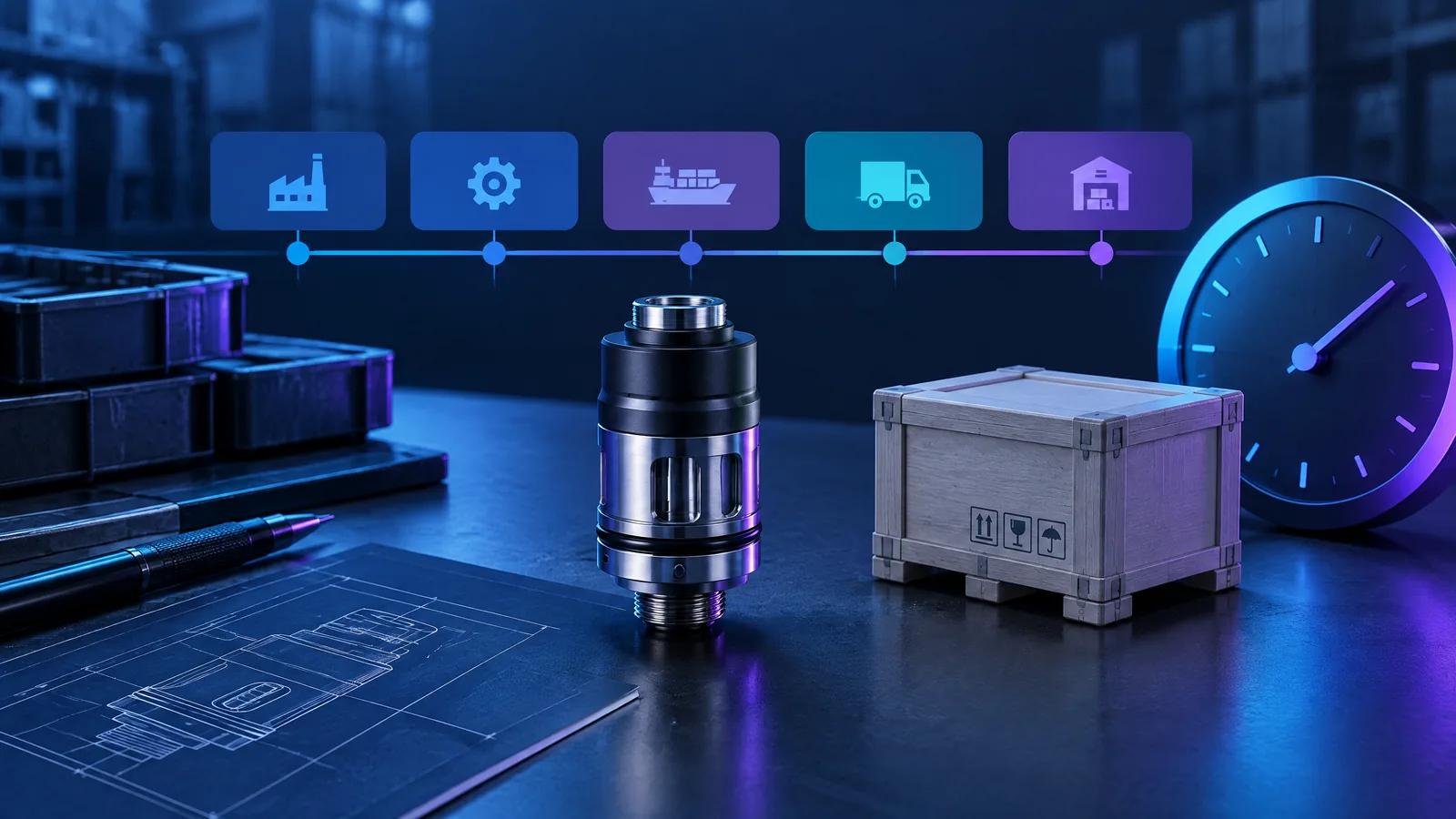
A reliable vape hardware lead time is not a single date. It is a documented sequence from specification lock through quality release, shipment handoff, and import readiness. U.S. licensed business buyers aged 21+ should ask what each milestone depends on, who owns it, and what changes could move it before planning downstream commitments.
What a vape hardware lead time actually contains
In B2B vapor hardware, “lead time” can mean the interval to finished goods, carrier handoff, arrival at a named destination, or warehouse acceptance. These are separate milestones with separate dependencies.
Ask what starts the clock: a complete RFQ, signed specification, approved samples, released artwork, receipt of buyer-supplied materials, or another named trigger. A date without a start condition cannot be evaluated. Also define the endpoint: production completion, quality release, cargo handoff, or delivery.
A plan should distinguish standard hardware from an OEM, ODM, or private-label configuration. A housing, interface, packaging, or branded-component change may require design confirmation and sample approval before procurement and assembly. The important question is whether the scope is defined well enough to schedule. See OEM/ODM and private-label options before discussing timing.
For U.S.-bound tobacco-related hardware, documentation is not an afterthought. FDA regulates the manufacture, import, packaging, labeling, advertising, promotion, sale, and distribution of ENDS, including components and parts while excluding accessories. Its examples include cartridges, atomizers, certain batteries, tank systems, and programmable software. FDA’s ENDS overview shows why a component-level description matters.
Ask milestone questions before requesting a date
A durable RFQ asks for both a date range and the evidence that permits each stage to begin. Use the following checklist to turn a broad timing question into a reviewable schedule.
| Milestone | Question for the B2B supplier | Decision-ready output |
|---|---|---|
| Scope lock | What drawing, bill of materials, compatibility requirements, and packaging files must be final? | Version-controlled specification and approval owner |
| Component readiness | Which buyer approvals, sourced parts, or custom items are on the critical path? | Dependency list with status and decision deadlines |
| Sample or pilot review | What must be evaluated before production release, and how are findings closed? | Acceptance criteria and documented disposition of observations |
| Production and quality release | What inspections or records are planned, and what constitutes release? | Inspection plan, release point, and responsible party |
| Shipment and import handoff | What commercial and shipping documents are needed, and who supplies each? | Document matrix, Incoterm, routing owner, and handoff definition |
Expose hidden buffers. Ask whether the configuration already exists, whether artwork or packaging remains in draft, whether inspection precedes packing, and who can approve a deviation. Capture answers in the RFQ record, not only in a sales call recap.
Ask whether timing includes the buyer review cycle. Assign one decision maker and response channel for each buyer-owned approval, then record the latest acceptable decision point. An RFQ guide can organize early questions without turning assumptions into commitments.
Make quality release and change control visible dependencies
A schedule is fragile when “quality” appears only as a final word before shipping. Instead, ask what is being checked, against which approved version, when checks happen, how exceptions are documented, and who can authorize a disposition. This gives the commercial team a way to distinguish a routine hold from a scope-changing issue.
For hardware configurations, the buyer can request a practical inspection outline covering visual requirements, dimensions or fit where relevant, function checks tied to the agreed configuration, packaging verification, and traceable records appropriate to the transaction. The exact inspection method should be proportionate to the item and agreed requirements; it should not be implied from a generic brochure. Use the vapor hardware quality inspection checklist to align inspection questions with the approved specification.
Samples should serve a defined decision. Ask whether the sample is for form, fit, interface compatibility, packaging review, process validation, or another stated purpose. Ask whether any sample differs from the proposed production configuration and, if so, how that difference will be resolved before release. A dated sample alone does not establish the production version.
This discipline matters for both time and change management. If a finding requires a substitution, rework, artwork correction, or retest, record the revision and evaluate its impact before proceeding. The proper status is “pending approved disposition,” not “on track” by default.
Use a short change-control record for any technical, commercial, packaging, documentary, or logistics change. It should name the requested change, reason, affected version, owner, approval status, and expected timeline effect. Require written approval before a change enters production-facing files. If the timing must be reconsidered, issue a replan rather than silently carrying forward the original date. A shared approval matrix and the vapor hardware change-control checklist help surface cross-functional decisions early.
Separate shipment timing from U.S. import readiness
Carrier handoff is not the same as a completed U.S. import process. U.S. Customs and Border Protection describes entry summary as documentation that enables duty assessment, statistics collection, and determination of whether other legal requirements have been met. CBP says the importer of record has up to 15 days after entry to file cargo-release documentation, and an entry summary is due within 10 days of cargo release from CBP custody. Review the current CBP entry-summary process with the responsible import team or customs professional.
For planning, ask who is the importer of record, which party prepares each commercial document, what product description and classification information will be used, and when the broker receives a final document package. Confirm the agreed Incoterm, routing responsibility, handoff location, and the communication path for document corrections. These are planning questions, not legal conclusions. The shipping and logistics overview can help frame the operational handoffs that should be settled alongside the commercial terms.
Regulatory status must remain product-specific. FDA’s public materials direct stakeholders to current marketing-order and authorization information. Verified business buyers should request the product-specific U.S. regulatory status and relevant documents from the responsible party, then review them with qualified legal and regulatory advisers. Do not treat a generic statement, a past shipment, or a supplier’s lead-time estimate as evidence of lawful status. This article is not legal advice.
FAQs
What is the best way to request vape hardware lead time?
Request a milestone-based plan that names the start trigger, end definition, buyer approvals, supplier dependencies, quality-release point, shipment handoff, and assumptions. Ask for the critical path and the procedure for updating the plan when a dependency changes.
Should a buyer treat a production-complete date as a delivery date?
No. Production completion, quality release, cargo handoff, import processing, and receipt are distinct events. Ask which event the supplier’s timing covers and plan each downstream event separately with the responsible parties.
Which documents should be discussed during the RFQ stage?
Discuss the commercial, specification, packaging, quality, and shipping documents that apply to the proposed transaction, along with ownership and review timing. For U.S.-bound product, verified buyers should also request product-specific U.S. regulatory status and relevant documents. This is not legal advice.
What if the specification changes after approval?
Use a written change-control process. Identify the affected files and milestones, obtain the required approvals, and re-evaluate the schedule before the change is used. Do not assume the original plan remains valid.
Sources and further reading
- FDA: E-Cigarettes, Vapes, and Other Electronic Nicotine Delivery Systems - FDA: E-Cigarettes and Other ENDS Authorized by FDA - U.S. Customs and Border Protection: Entry Summary and Post Release Processes
Planning an OEM, wholesale, or private-label vapor hardware project? Request a B2B quote with your approved scope, target milestones, and documentation questions so the conversation can begin with a defensible plan.