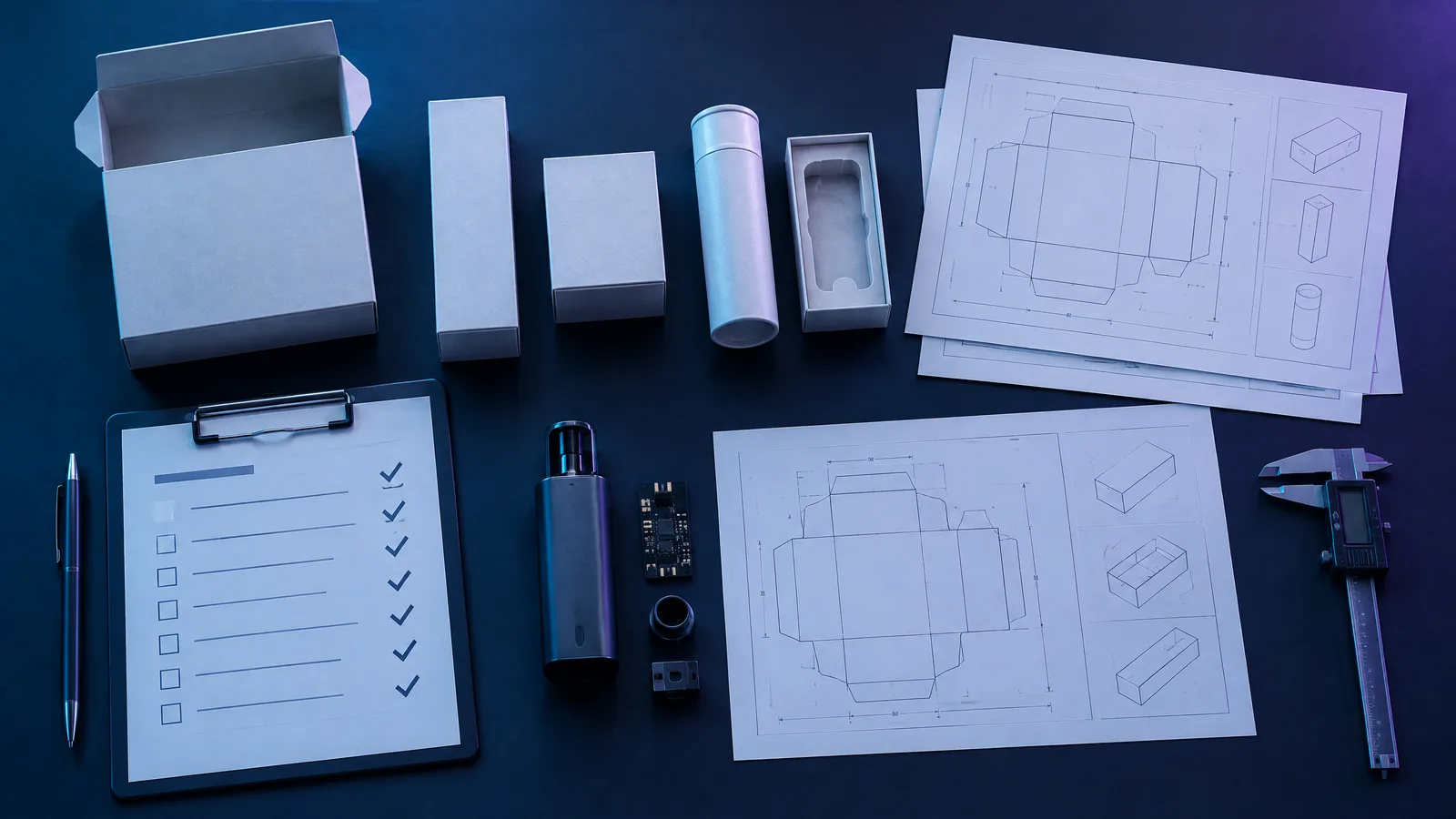
Before private label vape packaging moves to production, a B2B buyer should approve one controlled package record that links the finished SKU, artwork revision, pack configuration, and supporting documents. That simple discipline helps prevent a correct-looking carton from being paired with the wrong component, copy, instruction, or release file.
>
Establish one controlled package configuration
The first release question is not whether the artwork looks finished. It is whether everyone is approving the same item. The release record should identify the buyer SKU or product code, hardware configuration, included accessories, pack count, destination, print revision, and governing artwork file. Include every printed element that carries product information: carton, insert, sleeve, security label, wrapper, and shipping case where relevant.
For OEM/ODM or branded programs, assign clear buyer-side approvers for commercial content, technical configuration, and regulatory-facing review. The OEM/ODM and private-label overview can support the initial program discussion, but the release itself should name one accountable approver and one dated final revision. A verbal go-ahead, a cropped render, or “same as last time” is not a release instruction.
Use this concise pre-release checklist:
- Match identity. Verify SKU, configuration, included items, pack count, and destination against the purchase and artwork records.
- Lock the artwork. Confirm the filename, revision, dieline, dimensions, color callouts, printable panels, and any barcode or variable-data field.
- Approve the assembled pack. Compare a physical or representative packaged sample with the governing specification.
- Record evidence. Store dated proof approval, sample sign-off, inspection criteria, document-request results, and change history together.
Verify label copy against the finished item
Private label vape packaging is a business-control document. Review copy in the context of the final pack. Check the product name, model or identifier, quantity or count where applicable, instructions, warnings, business details, and logistics identifiers against the released configuration.
Do not move copy from one SKU to another without review. FDA distinguishes covered tobacco products from components or parts that are not made or derived from tobacco. Its guidance describes liquid nicotine as a covered tobacco product and uses a vaporizer that is not pre-loaded with tobacco or a tobacco-derived substance as an example of an item that is not covered on that basis. The appropriate treatment depends on the actual item, its contents, and the responsible party’s assessment. FDA’s covered tobacco product labeling guidance provides the official requirements and examples.
For applicable covered tobacco products, FDA states that the nicotine warning must be directly on the package and clearly visible beneath clear wrapping. Its guidance also describes requirements for the two principal display panels, including warning-area placement and presentation. Do not resize, reposition, cover, translate, or replace warning language based on an earlier job without a current product-specific review.
The same review should remove unsupported wording. Do not use package language that implies an unverified regulatory status, cessation effect, risk reduction, or another unsupported product claim. Check practical details, too: a model number that differs from the device, an accessory shown but not included, or a quantity statement that conflicts with the assembly plan can all create a release mismatch.
Validate the physical pack and inspectable criteria
A polished render is not a production proof. Review the actual dieline and final proof for bleed, safe areas, folds, seams, cutouts, and the placement of variable data. Confirm that a code, serial field, or other identifier remains visible and scannable after folding, wrapping, labeling, or case packing. If a variable-data field is used, define its data owner, format, placement, and reconciliation method before artwork release.
Then verify physical fit. The selected insert, tray, holder, or protective material should correspond to the final hardware and included items. Check component position, retention, opening method, instruction placement, and legibility after assembly.
When the package contains liquid nicotine, special packaging should be addressed as part of the design review. CPSC says the Child Nicotine Poisoning Prevention Act requires liquid nicotine containers sold, manufactured, distributed, or imported in the United States to use packaging that meets 16 CFR 1700.15. CPSC also addresses compliance certification in its Liquid Nicotine Packaging Business Guidance. Confirm applicability, testing or certification responsibilities, and the evidence to be supplied with responsible parties; a closure or package should not be assumed compliant from appearance alone.
Turn requirements into an inspection plan. Specify what counts as a critical artwork mismatch, missing printed element, wrong component, unacceptable damage, or failed variable-data check. The vapor-hardware quality inspection checklist is a practical starting point for aligning visual, dimensional, and assembly criteria. The buyer should approve those criteria before the package is released.
Bind documents and change control to release
A package release is incomplete if its record cannot show what was packed, which revision governed, and what supporting information was requested or received. Keep the approved artwork PDF, dieline, SKU list, pack-out reference, inspection record, packing-list fields, and change log aligned to the released configuration. The specific file set will differ by product and transaction.
For U.S.-bound goods, an artwork proof is not a substitute for import or regulatory review. CBP publishes Reasonable Care as informed-compliance material. Coordinate with the importer of record, customs broker, and relevant advisors so commercial descriptions, configuration, identifiers, and shipping documents do not conflict.
Verified buyers should request product-specific U.S. regulatory status and documents from the responsible party. FDA explains that a premarket tobacco product application can seek a marketing order for a new tobacco product and that the applicable final rule requires manufacturers to maintain records establishing that their tobacco products are legally marketed. See FDA’s Premarket Tobacco Product Applications overview. Packaging review does not establish legal marketing status, and this article is not legal advice.
Make every request specific to the item and revision under review. The supplier documentation checklist can structure the request. Record what was requested, who supplied it, the version received, and unresolved issues. Avoid general labels such as “compliant” when the record needs a document, date, product reference, or responsible-party confirmation.
Finally, route every change through a release gate. A new insert can change included-item language; a revised carton dimension can affect warning placement; a new identifier can affect shipping records. Use the change-control checklist to capture the reason, affected records, approval, and effective revision. Release authorization should state what is approved, by whom, on what date, and which file or sample governs the build. If the finished package cannot be connected to that authorization, pause release and resolve the discrepancy.
FAQs
What is the most important confirmation before packaging release?
Confirm the exact finished-product configuration. Copy, component fit, included items, documents, and inspection criteria all depend on knowing which SKU and pack-out the release covers.
Can a buyer reuse packaging artwork from a previous vapor-hardware project?
Only after a controlled review against the new configuration and destination. Similar hardware may have different pack contents, identifiers, labels, or required information. Treat reused artwork as a new revision until approved.
Does packaging approval confirm that a product is legally marketable in the United States?
No. Packaging approval is a commercial and quality-control decision. Verified buyers should request product-specific U.S. regulatory status and supporting documents from the responsible party and seek appropriate professional advice. This is not legal advice.
Sources and further reading
- FDA: Covered Tobacco Products and Roll-Your-Own/Cigarette Tobacco Labeling and Warning Statement Requirements - CPSC: Liquid Nicotine Packaging Business Guidance - FDA: Premarket Tobacco Product Applications - U.S. Customs and Border Protection: Reasonable Care
Ready to align a controlled packaging brief with your hardware program? Request a B2B quote and include the SKU scope, destination, and current artwork or packaging specifications.