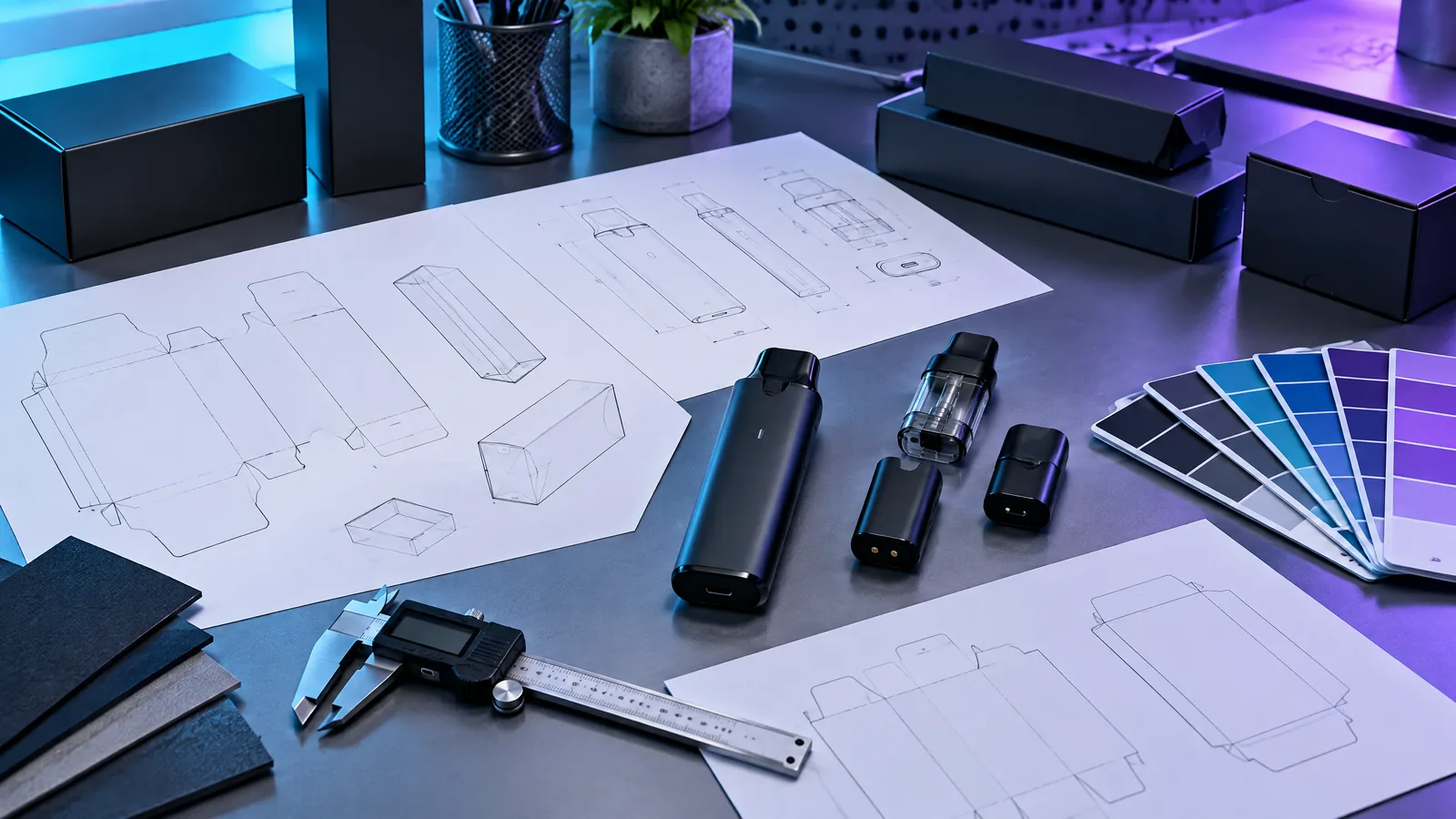
Private-label vapor hardware should not start with a logo file. For U.S. licensed business buyers working in adult-only, 21+ channels, the first step is to define the product, documentation, packaging, and approval path. A written scope lets artwork represent a specific, reviewable hardware program rather than a collection of assumptions.
>
Start With Business and Regulatory Scope
“Private label” can cover applying a buyer’s brand to an existing configuration, adapting a platform, or developing a new configuration. State the commercial model, responsible contact for each deliverable, and when buyer artwork becomes controlled. See Autosweave Labs’ overview of OEM, ODM, and private-label programs for a planning framework.
When evaluating a private label vape manufacturer, do not let a program label stand in for a product-specific record. Identify the finished configuration, who provides branded items, who approves artwork, and which B2B participants review the package.
FDA states that it regulates ENDS manufacture, import, packaging, labeling, advertising, promotion, sale, and distribution, including components and parts but excluding accessories. Examples include cartridges, atomizers, certain batteries, displays, tank systems, mouthpieces, and programmable software. FDA’s ENDS page should guide questions, not replace review of the defined product.
Verified buyers should request current, product-specific U.S. regulatory status and supporting documents from the responsible party. FDA notes that parties that make, modify, manufacture, label, repackage, relabel, or import ENDS must meet manufacturer requirements. This is general B2B information, not legal advice; use qualified advisers for a specific product.
Define the Hardware Before Designing It
Artwork cannot resolve an undefined configuration. Before typography, color, or panel layout, create a plain-language product definition that all reviewers can use. The objective is traceability without reconstructing scope from email threads.
Use a configuration sheet to record the device family, identifier, revision, form factor, interfaces, power-related elements, finishes, included items, and packaging format. Mark options that change finished presentation, such as a color option, component variant, insert, or carton. A sample supports evaluation; it is not a permanent specification by assumption.
The same sheet should name exclusions: buyer-supplied content, items outside the package, and functionality or claim text not approved for artwork. This commercial control makes gaps visible before prepress.
| Scope element | Record before artwork | Why it matters |
|---|---|---|
| Hardware configuration | Identifier, revision, interfaces, components, finish, and included items | Links each artwork file to a physical unit |
| Brand system | Approved marks, color references, typography, copy owner, and prohibited copy | Prevents unreviewed substitutions |
| Packaging architecture | Carton, insert, seal, labels, panel map, and file formats | Places copy and graphics on the right surface |
| Documentation | File name, source, owner, date, revision, and reviewer | Creates a usable review package |
| Release control | Approval sequence, change trigger, effective date, and record location | Keeps hardware and artwork revisions aligned |
Treat Packaging and Artwork as Controlled Inputs
Brief private-label artwork as files and panels, not a front-facing visual alone. Begin with a panel map identifying every exterior panel, label, insert, instruction, and accompanying item. Assign the source of truth for product names, model identifiers, responsible-business information, instructions, warnings, and region-specific copy. Identify the buyer approver for visual assets and for regulated or operational text.
The product-specific regulatory question belongs outside graphic design. Under 21 CFR Part 1114, a new tobacco product may not be introduced or delivered for introduction into interstate commerce until FDA issues a marketing granted order. The regulation also says proposed PMTA labeling specimens must include all panels, actual proposed size and color, and applicable warnings and other required information. Preserve panel-level traceability and revision history.
Do not infer U.S. marketing status from a logo, artwork proof, supplier statement, or establishment record. A verified buyer should request the current product-specific status and relevant supporting documents from the responsible party, then assess how that record affects its intended transaction. Keep regulatory-document review separate from brand-design approval.
For a more complete prepress handoff, use the private-label vapor packaging RFQ checklist to organize panel specifications, file requirements, and approval inputs.
Build Documentation and Change Control Into the Scope
A durable scope document identifies the evidence expected with the program and who must keep it current. Create a document register with the document title, applicable product identifier, issuing party, version, date, reviewer, and storage location. It may include product specifications, artwork proofs, packaging specifications, inspection criteria, shipping marks, and buyer-requested records. The register should not state or imply that any document creates a regulatory outcome.
FDA distinguishes establishment registration from product listing. Its registration and product-listing information describes annual registration for domestic establishments and biannual reporting of specific products, including certain product-name, labeling, advertising, and distribution changes. For B2B planning, that distinction is a prompt to request and evaluate appropriate product-specific records, not a shortcut to a marketing-status conclusion.
Set change control before accepting the first artwork proof. A change request should name the proposed change, affected product and packaging identifiers, reason, reviewer, decision, effective revision, and whether new artwork or documents are needed. Flag device revisions, component substitutions, product-name changes, panel-copy revisions, insert changes, packaging-material changes, and changes to responsible parties. Autosweave Labs’ change-control checklist can help structure that record.
Validate the RFQ Package Before Release
A usable RFQ package gives each reviewer the same operating picture. It should be concise, versioned, and ready for a written response. Complete this checklist before final quotation or release:
- Identify the exact configuration. Include the internal identifier, revision, finish, included items, and unresolved alternatives.
- Attach the artwork map. List every panel, label, insert, instruction, and file; name the copy owner and reviewer for each.
- Name the document request. State the product-specific U.S. regulatory-status information and documentation verified buyers need to request, plus operational and quality records relevant to the transaction.
- Separate approvals. Record who can approve configuration, commercial terms, artwork, document review, and release. One approval should not silently cover another.
- Define revision rules. Set the naming convention, master-file location, approval evidence, and escalation route for post-approval changes.
- Confirm logistics inputs. Record the ship-to business entity, shipping-mark owner, package configuration, and required document handoff. Review shipping and logistics before artwork is final.
This discipline does not make a transaction automatic. It gives verified buyers, suppliers, and internal reviewers a shared basis for an accountable B2B discussion.
FAQs
What is the difference between private label, OEM, and ODM for vapor hardware?
Private label commonly focuses on a buyer’s brand applied to a defined offering. OEM and ODM can involve different degrees of buyer-supplied design input or supplier-led development. The useful question is which party controls the configuration, artwork, documentation, and changes.
Does an approved artwork proof define the product?
No. An artwork proof should cite a controlled product identifier and revision. It confirms the file under review; it does not replace the configuration sheet, document register, or change-control record.
What U.S. regulatory information should a verified buyer request?
Request current, product-specific U.S. regulatory status and the documents the responsible party can provide for the defined product. Public FDA information can inform that inquiry. Assess the response with qualified legal or regulatory advisers; this is not legal advice.
When should artwork be revised?
Revise it when a controlled input affecting the presented product changes, including the product name, device revision, included materials, panel copy, required information, or packaging architecture. Record the decision and effective revision before release.
Sources and further reading
- FDA: E-Cigarettes, Vapes, and Other Electronic Nicotine Delivery Systems (ENDS) - FDA: Tobacco Product Establishment Registration and Product Listing - Electronic Code of Federal Regulations: 21 CFR Part 1114—Premarket Tobacco Product Applications
Ready to turn a defined private-label scope into a B2B discussion? Submit the controlled brief through our request-a-quote form.