Fruit-Profile Vapor Packaging Artwork: A B2B Review Checklist
Fruit-profile packaging artwork should be reviewed as a controlled B2B project record—not as a consumer promotion or a shortcut to product approval. A useful review identifies the exact configuration, package format, proposed descriptor placement, intended market, current artwork version, required documentation, decision owner, and product-specific U.S. market-status route. A generic phrase such as “fruit vape packaging” does not establish that a given design, product, or transaction is authorized, compliant, available, or ready to ship.
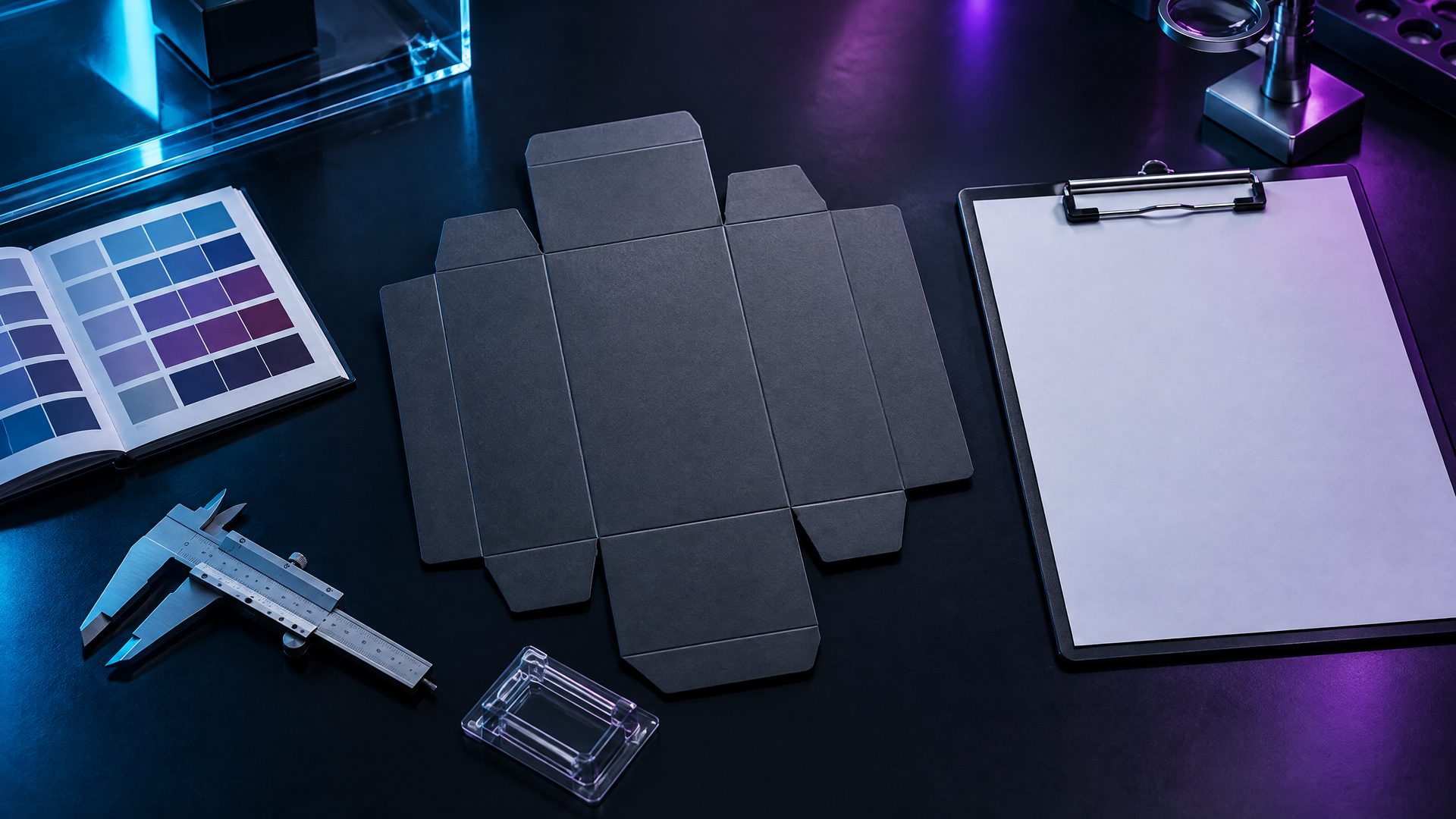
What is a fruit-profile vapor packaging artwork review?
A fruit-profile vapor packaging artwork review is a documented B2B process for comparing a proposed artwork file with a named project baseline and recording the questions that need an authorized answer. It helps a licensed buyer, supplier, artwork owner, and appropriate reviewer distinguish approved inputs from open issues before a commercial or production discussion moves forward.
FDA states that it regulates the manufacture, import, packaging, labeling, advertising, promotion, sale, and distribution of electronic nicotine delivery systems (ENDS), including components and parts of ENDS but excluding accessories. FDA lists e-liquids and flavorings for ENDS among regulated components and parts.1 In a B2B project, that scope makes a packaging review more than a design exercise: it is a way to preserve the exact context that a relevant reviewer must assess.
A fruit-profile term should therefore be recorded as proposed content. It may be a working descriptor in a brief, a named artwork element, or an open packaging question. It should not be presented as proof that a particular product can be marketed, distributed, imported, or sold. For the upstream product-brief process, see the fruit-profile vapor product buyer guide. That guide explains how to turn broad search language into a product, documentation, and market-status question.
What should be included in a fruit-profile artwork review packet?
The review packet should identify the named product, the named file, the package scope, the proposed content, and the project decision it is meant to support. This prevents a draft image, prior packaging file, or generic vendor reference from becoming an unsupported approval claim.
| Review packet area | Question to answer | Controlled B2B record |
|---|---|---|
| Project identity | What exact configuration and intended market does the file relate to? | Model or project reference, component scope, version baseline, and intended destination. |
| Artwork identity | Which file is under review? | File name, revision, date, owner, source, and whether the file is a concept, proof, or approved production input. |
| Package scope | Where would the artwork appear? | Primary package, secondary carton, insert, display material, website asset, or another named material. |
| Descriptor scope | What fruit-profile language or visual treatment is proposed? | The exact proposed term or element, placement, purpose, and reviewer question. |
| Required content | Which warnings, statements, identifiers, or other inputs need review? | A scoped list of required inputs and their source—not a generic “compliant” label. |
| Decision boundary | What does the review authorize or leave open? | Reviewer, decision date, unresolved items, and next route for evidence or escalation. |
The item that matters most is traceability. If a reviewer cannot identify the exact product, artwork revision, location, intended market, and outstanding questions, the file is not a reliable decision record. A buyer should use the private-label vapor packaging RFQ checklist to organize inputs before requesting commercial feedback.
How should a buyer handle fruit-profile wording and visual concepts?
Handle fruit-profile wording and visual concepts as proposed packaging content that needs a defined review, not as an implied promise about characteristics, authorization, or audience. The buyer’s first job is to describe what is actually being proposed and where it would appear. The reviewer’s job is to evaluate the project-specific question through the appropriate route.
FDA’s labeling and warning-statement page identifies requirements for tobacco-product packages and advertisements and links to resources for covered tobacco products, including vaporizers, e-cigarettes, and other ENDS.2 The same FDA page describes restrictions on the use of “light,” “mild,” “low,” or similar descriptors without a Modified Risk Tobacco Product order.2 The page is a general resource, not a pre-approval of wording, illustrations, package layouts, or retail materials for a particular product.
A durable artwork review uses these five questions:
- What is the exact content? Preserve the proposed term, visual concept, color treatment, and placement in a specific file revision.
- What is the exact product connection? Identify the named configuration, component scope, and intended market; do not apply a category-level description to an undefined product.
- What does the review cover? State whether the reviewer is looking at package structure, version control, required-content placement, a descriptor question, or another defined scope.
- What is still open? Do not resolve product status, legal interpretation, technical specifications, or shipment eligibility by implication if those questions remain unverified.
- Who can release the next version? Record the decision owner and the evidence or instruction needed before a draft moves to the next stage.
This approach supports B2B clarity without turning the article into a consumer-facing flavor guide. It avoids suggestive or youth-oriented presentation by focusing on versioned artwork, packaging scope, and verified business review.
Which packaging statements and records should be reviewed together?
Review the packaging file together with the project records that give it meaning. A package mockup can show layout, but it cannot by itself prove that the named product, descriptive language, warning statement, destination, or commercial route has been approved for a transaction.
| Review record | Practical review question | What the record does not establish by itself |
|---|---|---|
| Artwork proof | Is this the current named revision, and is every review comment linked to it? | Product authorization, commercial availability, or shipment approval. |
| Product baseline | Which configuration, components, and package format are under discussion? | That every later configuration or production lot is identical. |
| Required-content matrix | Which statements or package elements require project-specific consideration? | A complete legal or regulatory conclusion for every market. |
| Change log | What was altered from the prior approved project baseline? | Automatic acceptance of the change. |
| Commercial brief | What purchase range, destination, timing, and buyer route apply? | An MOQ, lead-time, quote, or final logistics commitment. |
| Status-request route | How will product-specific U.S. market-status information be handled? | That the artwork alone determines a product’s legal marketing status. |
The vapor hardware change-control checklist is useful if an artwork, packaging, component, supplier, or process input changes after a project baseline has been established. Use the supplier documentation checklist to organize the documents that must be requested through a verified-buyer route.
When does liquid-nicotine-container packaging matter?
Liquid-nicotine-container packaging matters when the proposal includes nicotine provided in a liquid nicotine container for the U.S. market. It does not automatically apply to every hardware-only or closed-system packaging discussion. The buyer should document whether that stated scope applies, rather than assuming from a packaging photo or project title.
CPSC explains that the Child Nicotine Poisoning Prevention Act requires nicotine provided in a liquid nicotine container that is sold, offered for sale, manufactured for sale, distributed in commerce, or imported into the United States to use packaging meeting the requirements of 16 CFR § 1700.15.3 CPSC also explains that it regulates special packaging of liquid nicotine containers, not liquid nicotine itself or tobacco and tobacco products under the cited statutory exclusions.3
The distinction matters because an artwork-review checklist cannot decide the full legal status of a project. It can help the buyer ask the right question: does the exact product and package under review include that scope, and which qualified route must handle the answer?
| Packaging scenario | Buyer action | Boundary to preserve |
|---|---|---|
| Proposal includes nicotine in a liquid nicotine container for the U.S. market | Identify the product and container scope; request product-specific packaging review. | The review does not establish complete tobacco-product regulatory status. |
| Proposal is hardware-only or otherwise outside that stated container scope | Record the actual configuration and market, then request qualified review as needed. | The exclusion does not prove no other packaging or labeling question applies. |
| Artwork is reused from a prior project | Compare named product, package format, intended market, revision history, and required-content scope. | A prior file is not automatically approved for a new configuration or market. |
Does artwork approval establish U.S. marketing status?
No. An artwork proof, packaging sign-off, color selection, or supplier conversation does not establish that a specific tobacco product may be legally marketed in the United States. FDA states that a company must receive a written marketing order to legally market a new tobacco product in the United States.4
FDA also explains that a pre-existing tobacco product modified in any way is considered a new tobacco product under the cited provision and must apply for an FDA marketing order through one of the listed pathways.4 This article does not determine whether a particular artwork change, package change, descriptor, or other change has a particular regulatory effect. It provides a B2B method for keeping the issue visible and routing it for product-specific review.
The Compliance Center explains the site’s general approach to product-specific status requests. A verified buyer should request information for the exact configuration and intended transaction rather than infer an outcome from a packaging file, a general website statement, or a category-level label.
How should a B2B buyer run an artwork review before an RFQ?
Run the review as a short, version-controlled decision sequence that turns a broad packaging query into a qualified B2B project brief. The goal is to provide a supplier with a clear request while preserving open compliance, documentation, technical, and logistics questions.
- Set the project baseline. Name the configuration, package type, intended market, destination, and commercial route before discussing decorative or descriptive content.
- Freeze the reviewed input. Give each proposed file a clear revision identifier, owner, date, and stated review purpose.
- Map artwork to package scope. Identify every proposed location, such as a primary package, carton, insert, display material, or website asset.
- List content questions separately. Distinguish the fruit-profile descriptor, required-content inputs, brand elements, and unresolved product-status questions.
- Record the review outcome. Mark each item as approved for the stated review scope, needing revision, needing supporting information, or outside the reviewer’s authority.
- Route sensitive materials securely. Do not place confidential artwork, licenses, resale records, or proprietary specifications into a public RFQ field. Use an approved verified-buyer route.
- Prepare the commercial brief. Add buyer qualification, expected range, intended market, destination, timing, documentation needs, and decision owner.
Use the vape hardware MOQ and RFQ guide to prepare commercial inputs and the fruit-profile vapor product buyer guide to connect the packaging review to a controlled product brief. Then submit a Request for Quote for a licensed, adult B2B discussion.
Sources and further reading
- U.S. Food and Drug Administration, “E-Cigarettes, Vapes, and Other Electronic Nicotine Delivery Systems (ENDS)” — accessed October 9, 2026.
- U.S. Food and Drug Administration, “Labeling and Warning Statements for Tobacco Products” — accessed October 9, 2026.
- U.S. Consumer Product Safety Commission, “Liquid Nicotine Packaging Business Guidance” — accessed October 9, 2026.
- U.S. Food and Drug Administration, “Tobacco Products Marketing Orders” — accessed October 9, 2026.
Frequently Asked Questions
What should a buyer include in a private-label fruit-profile vapor packaging review?
Include the named configuration, intended market, artwork revision, package locations, proposed descriptor placement, required-content questions, requested documentation, commercial route, destination, timeline, and decision owner. Keep unresolved status, legal, technical, and logistics questions visible rather than assuming approval.
Does a fruit-profile package mockup prove that a vapor product can be sold in the United States?
No. A mockup, artwork proof, packaging sign-off, or supplier conversation does not establish a product’s U.S. marketing status. FDA states that a company must receive a written marketing order to legally market a new tobacco product in the United States. Request product-specific information through a verified-buyer route.
Why is artwork version control important for a vapor packaging project?
Version control ties the exact file under review to its named product, package location, intended market, reviewer, and decision. It prevents draft images, prior projects, or generic category language from being mistaken for the approved input for a specific transaction.
When should CPSC liquid nicotine container guidance be included in the review?
Include it when the proposal involves nicotine provided in a liquid nicotine container for the U.S. market. CPSC guidance addresses special packaging in that stated scope; it does not decide the complete regulatory status of the tobacco product or every packaging question in a project.
Next step for licensed B2B buyers
For a qualified packaging artwork discussion, submit a Request for Quote with the named configuration, intended market, artwork version, package scope, proposed descriptive-language placement, documentation needs, destination, and timeline. The RFQ route is for licensed adult B2B buyers only.