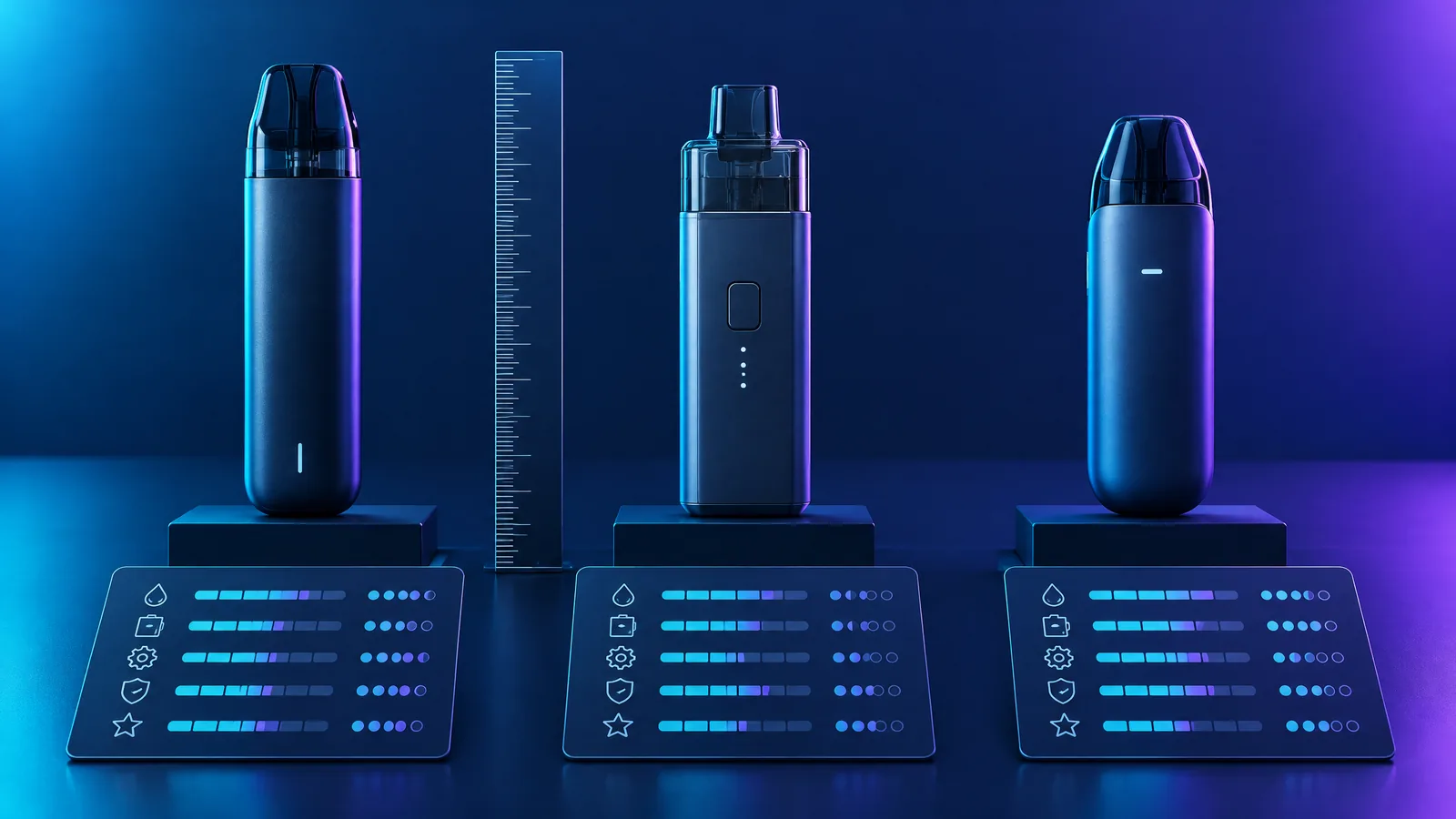
For U.S. licensed business buyers aged 21+, the productive way to compare an all-in-one vapor hardware manufacturer is to turn a device concept into verifiable requirements: architecture, interface control, quality plan, change control, documentation, and import responsibilities. A clear inquiry produces a more useful technical and commercial discussion than a product-photo comparison.
>
Start With a Commercial Definition of “All-in-One”
An all-in-one vapor device is a commercial description, not a full technical specification. Before contacting an all in one vape manufacturer, define whether the power source, reservoir, and heating assembly are integrated, and whether the requested product is a single assembled unit or a platform with components before final assembly. Those distinctions affect drawings, test plans, labeling, packaging, and documentation.
Create a short brief that names the configuration: form factor, major materials, nominal electrical characteristics, interface, actuation, indicator behavior, finish, and packaging concept. A reference sample can communicate ergonomics or exterior direction, but it does not establish tolerances, approved materials, firmware behavior, or a test method. Use the OEM/ODM and private-label overview to frame the requested design responsibility.
Compare the System Architecture, Not the Exterior
Two devices that look alike may be built around different internal interfaces and control logic. Ask each prospective manufacturer to respond to the same requirement set. This makes the answers comparable and surfaces dependencies that can otherwise appear after tooling, artwork, or sample review begins.
| Comparison area | What to define in the inquiry | What to request for review |
|---|---|---|
| Mechanical system | Envelope, interfaces, material callouts, finish boundaries, and critical dimensions | Controlled drawing, revision identifier, and measurement approach |
| Electrical system | Nominal operating parameters, interface expectations, and indicator logic | Electrical specification, functional test description, and configuration identifier |
| Heating-path system | Component interfaces, sealing concept, compatibility scope, and restricted materials | Component scope, interface drawings, and inspection records |
| Software or firmware | Version control, user-facing behavior, and update policy if applicable | Version identifier, functional acceptance criteria, and change-notification process |
| Pack-out | Unit orientation, inserts, artwork ownership, carton configuration, and tamper-evidence needs | Packaging specification, proof workflow, and inspection criteria |
The goal is not to prescribe engineering methods; it is to confirm that both sides mean the same device. Tie “compatible” to a stated mating part, drawing revision, test condition, and acceptance criterion. Replace broad descriptions with observable requirements and pass/fail methods. For a 510-thread project, define the actual thread, contact, clearance, and electrical interface; the 510-thread cartridge compatibility B2B checklist can organize those inputs.
Make Quality Controls and Change Control Comparable
A B2B inquiry should ask how the specification will be inspected, recorded, and kept current. Identify the characteristics that would make a unit unacceptable—such as cosmetic conditions, assembly alignment, interface fit, electrical function, packaging accuracy, and traceability—and request the inspection point, method, acceptance criteria, and disposition process.
Match critical characteristics to incoming parts, in-process assembly, final function, and outgoing pack-out. The response should identify the document controlling each requirement, not simply state that testing occurs.
Set change control before evaluation. A material, subcomponent, tooling, firmware, artwork, or packaging change can alter the configuration. Establish notification, buyer-approval, comparison, and revised-identifier requirements, then carry approved revisions into purchase documentation. The vapor hardware quality inspection checklist and change-control checklist can structure the discussion.
Put U.S. Documentation and Regulatory Review Before Commitment
U.S. regulatory responsibilities cannot be determined from a device image, a category label, or a supplier statement. FDA explains that parties that make, modify, assemble, label, repack, relabel, or import tobacco products can be considered tobacco product manufacturers; importers of finished tobacco products may also be regulated as manufacturers, distributors, or both. FDA lists registration and product listing, ingredient listing, and marketing pathways among requirements that apply as relevant. See FDA’s manufacturing requirements overview.
For an all-in-one vapor program, ask for product-specific U.S. regulatory status and documents only through verified buyer channels, and have qualified counsel or regulatory professionals assess what applies to the exact proposed product, labeling, and supply arrangement. Do not assume that a document for a different configuration, brand, component set, or market establishes anything for the program under review. This article is general business information, not legal advice.
FDA states that its PMTA framework includes application content and format requirements and that manufacturers must keep records establishing that tobacco products are legally marketed. It also notes that review considers, among other things, manufacturing, processing, and packing methods, facilities, and controls. Review the agency’s PMTA information and ENDS PMTA guidance alongside your compliance process.
For importation, assign responsibility for entry data, product records, and communications early. CBP states that tobacco products, including e-cigarettes, imported or offered for import must comply with applicable U.S. laws. Coordinate logistics with regulatory review and use the vape supplier documentation checklist to standardize the request set.
Send an Inquiry That Can Be Answered Precisely
A well-prepared request for quotation is a controlled business document, not a catalog request. Attach the current device brief, distinguish decided points from open engineering questions, and state responsibility for design, artwork, packaging, documentation, quality release, logistics, and change approval.
Before submitting, check that the inquiry answers these questions:
- What configuration is being evaluated? Identify the device concept, interfaces, finish boundaries, pack-out, and revision date.
- What evidence is needed? List drawings, material declarations, sample records, inspection criteria, packaging proofs, and configuration or change records.
- Who approves what? Name the buyer-side contacts or functions authorized to approve specifications, artwork, samples, and changes.
- How will samples be evaluated? Specify the test conditions, observations to record, acceptance criteria, and whether the sample is exploratory or tied to a proposed specification.
- What commercial assumptions need discussion? Identify forecast context, destination, proposed Incoterms, packaging scope, and requested support without treating them as fixed commitments.
Avoid a blanket assurance that a device is “compliant.” Request the specific records and status information your team needs, tied to the exact configuration. The vape hardware MOQ and RFQ guide can organize a request without treating volume or timing as a preset promise.
FAQs
What is the most important comparison point for an all-in-one device?
The most important point is whether the proposed configuration is controlled and testable. A shared drawing set, interface definition, acceptance criteria, and change process reveal more than product photos or category terminology.
Should a buyer evaluate a sample before finalizing specifications?
A sample can support evaluation when it is identified by configuration and assessed against written conditions. Record what it demonstrates, what remains open, and whether it matches the proposed specification. It does not substitute for controlled requirements.
What documents should a verified buyer request?
The request depends on the product and commercial role. Ask through verified channels for configuration-specific technical, quality, packaging, and regulatory-status information needed for review, and have applicable U.S. requirements assessed for the precise transaction.
Does an import arrangement change the inquiry?
Yes. It should prompt early assignment of responsibilities for product records, entry information, logistics coordination, and regulatory review. Import participation may carry regulatory implications, so the arrangement should be reviewed by qualified professionals.
Sources and further reading
- FDA: Manufacturing tobacco products - FDA: Premarket Tobacco Product Applications - FDA: ENDS PMTA guidance for industry - U.S. Customs and Border Protection: e-cigarettes imported or offered for import
Prepare a configuration-specific B2B inquiry
For an all-in-one vapor hardware discussion, request a quote with your device brief, configuration details, documentation questions, and quality/change-control expectations. Autosweave Labs supports B2B manufacturing, wholesale, OEM/ODM, and private-label discussions for licensed business buyers aged 21+.